
DIRECTORS
S. K. Bhagavan, A C Narasimhara Muthy
CAST
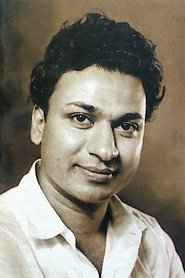
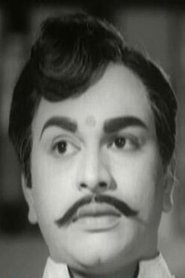
Dr. Rajkumar, Bharathi Vishnuvardhan, Dinesh +3 more
LANGUAGE
KN
STATUS
Released
VIDEO QUALITY
HD
Top Cast



PRODUCTION COMPANIES
Krishnodaya Chithra
Reviews
V
VashistaBhat999
Oct 14, 2026
10/10
**Rajadurgada Rahasya: Masterpiece of Historical Action and Adventure**
**Movie Review/Analysis:**
**Cast:**
-Dr. Rajkumar as Ramannanayaka and Somanannayaka
-Bharathi as Girija
-Ud...
**Rajadurgada Rahasya: Masterpiece of Historical Action and Adventure**
**Movie Review/Analysis:**
**Cast:**
-Dr. Rajkumar as Ramannanayaka and Somanannayaka
-Bharathi as Girija
-Udaykumar as Maranayaka
-Dinesh as Sajjenayaka
-Narasimharaju as Bhimanjaneya
**Crew:**
Director: A.C. Narasimhamurthy, S.K. Bhagawan
Story written by Nandana
Production (Banner): Krishnodaya Chitra
The duration of Rajadurgada Rahasya is 144 minutes
**General Information:**
Kannada Film Industry (KFI) began in 1934, and since then there have been numerous classics, and among those numerous classics, Rajadurgada Rahasya is also one among them. For me, Dr. Rajkumar is the greatest actor of all-time in the history of cinema. Rajadurgada Rahasya is also one of my favourite movies of all-time. I watched Rajadurgada Rahasya for the first time in 2024 in Udaya Movies print as a 25 year old youth, and then I rewatched it many times. Nandana had written the story and the screenplay. The film was directed by A.C. Narasimhamurthy and S.K. Bhagawan. This marked the second collaboration between Dr. Rajkumar and this duo after Sandhya Raaga, which is also a masterpiece in my opinion. Rajadurgada Rahasya released on 4th August 1967.
**The Plot:**
Vikramasimha is the Emperor of Rajadurga. The sons of his younger brothers are Ramannanayaka (Dr. Rajkumar) and Somannanayaka (Dr. Rajkumar). Due to certain administrative disagreements, the feudal chieftain of the neighboring region, Sajjenayaka (Dinesh), is in rebellion against Vikramasimha. Ramannanayaka, who went to suppress this rebellion, returns victorious. Because of this success, he considers it proper to capture the brothers.
Meanwhile, Maranayaka (Udaykumar), who is the brother-in-law of King Vikramasimha implicitly expresses a malicious desire. His view is that the elder Somannanayaka is worthy of becoming the crown prince. Somannanayaka is actually a drunkard who constantly spends his time in the company of wine and women. Maranayaka thinks that if such a person is made crown prince, he can easily be manipulated to eventually take over the royal dynasty himself. However, when his evil intentions are met with resistance, a dire situation arises. To overcome this, Maranayaka feeds a drugged drink to the King and Queen and secretly imprisons them in the dungeons. Through an accomplice, he sets fire to the palace. He then spreads the false rumor that Ramannanayaka alone is responsible for the palace burning down, thereby inciting deep hatred against him among the people.
One day, Ramannanayaka accidentally saves Girija (Bharathi), the daughter of the feudal chieftain Sajjenayaka, from being abducted. From that day onwards, Girija falls in love with Ramannanayaka, though he is unaware of it. Once, while Ramannanayaka is traveling alone, he is captured by Sajjenayaka. Wanting to take revenge on the one who defeated him, Sajjenayaka inflicts various punishments. When Girija comes to know about this, she clears up these misconceptions. Furthermore, she explains the anarchy and illicit dealings caused by Maranayaka in Rajadurga, and upon learning the truth, Sajjenayaka readily offers all-around help to Ramannanayaka.
Meanwhile, in Rajadurga, Maranayaka uses Ramannanayaka's absence to make all preparations for Somannanayaka's coronation. As soon as they receive this news, both Sajjenayaka and Ramannanayaka lay siege to Rajadurga with an army. A fierce battle ensues inside the palace, and Somannanayaka is killed. In this situation, to expose the background of the King's imprisonment and the traitors responsible for the injustices and malpractice in the kingdom, Ramannanayaka disguises himself as Somannanayaka. Consequently, Maranayaka pushes Sajjenayaka—who had come to Ramannanayaka's assistance—into the same dungeon where King Vikramasimha is imprisoned.
When Girija learns the news that her father has been imprisoned, she runs to Rajadurga in search of him. Captivated by Girija's beauty upon seeing her, Maranayaka makes advances toward her. When Girija rejects his demands, he has her imprisoned and begins to harass her in various ways. However, Ramannanayaka, who is now disguised as Somannanayaka rescues her from the dungeon. When Girija returns to rescue her father, Maranayaka seizes her again and insists that she marry him.
At that moment, Ramannanayaka arrives disguised as a magician, throws magical ash into Maranayaka's eyes, and sets Girija and Sajjenayaka free. Finally, as Ramannanayaka sets out to liberate his uncle Vikramasimha and his aunt from imprisonment, Maranayaka lays a well-laid trap and captures Ramannanayaka thinking him to be Somannanayaka. As Ramannanayaka, Girija and Sajjenayaka are about to be killed as a death penalty, Ramannanayaka frees himself and a fierce hand-to-hand combat takes place between Ramannanayaka and Maranayaka. Maranayaka is shocked as Somannanayaka was not powerful like Ramannanayaka, to which he reveals that he is Ramannanayaka and the combat continues culminating in Maranayaka's death. Ramannanayaka and Girija’s marriage is arranged.
**Story Analysis:**
I loved the story of Rajadurgada Rahasya which in my opinion is exceptionally strong, perfect, flawless, and it has a profound depth because it is built as a character-driven story centered on Ramannanayaka. Ramannanayaka is the central character who drives the entire story of Rajadurgada Rahasya. Ramannanayaka is not merely a protagonist who reacts to circumstances. He actively changes the direction of the narrative. To consider how the major developments unfold, we have to examine the major developments and Ramannanayaka’s contribution.
The major developments are: Sajjenayaka's rebellion, introduction of Girija, conflict with Sajjenayaka, alliance against Maranayaka, Somannanayaka's death, Girija’s imprisonment, the final confrontation, and liberation of the royal family.
Ramannanayaka’s contribution are: suppresses the rebellion and returns victorious, rescues her from abduction, initiating their romantic relationship, his capture eventually leads to the revelation of Maranayaka's conspiracy, joins forces with Sajjenayaka to attack Rajadurga, assumes his brother’s identity to uncover the conspiracy, rescues her through disguise and ingenuity, undertakes the mission to rescue the imprisoned rulers, defeats Maranayaka and brings the conspiracy to end, liberating the royal family.
What makes this particularly interesting is that Ramannanayaka's actions connect virtually every major narrative development.
Even when Maranayaka controls the kingdom, the story's progression revolves around the threat posed by Ramannanayaka and his attempts to restore justice. Ramannanayaka is an active protagonist rather than passive protagonist because there is an important distinction between a protagonist who merely experiences events and one who determines their outcome.
Ramannanayaka belongs firmly to the second category.
He demonstrates several characteristics that make him an effective narrative-driving protagonist:
i). Military competence: His initial victory over Sajjenayaka establishes his abilities as a warrior.
ii). Compassion: His rescue of Girija establishes another dimension of his personality.
iii). Strategic intelligence: Rather than relying exclusively on military strength, he disguises himself as Somannanayaka to investigate the conspiracy.
iv). Resourcefulness: His appearance as a magician demonstrates his ability to adopt unconventional methods.
v). Physical courage: His final confrontation with Maranayaka brings the central conflict to its conclusion.
His character is therefore not confined to a single heroic quality. Different situations demand different abilities, and he repeatedly demonstrates them. This variety also contributes to the story's momentum. Maranayaka is equally important as the generator of conflict because although Ramannanayaka drives the narrative toward its resolution, Maranayaka is the principal architect of its central conflict.
Maranayaka's ambition produces a chain of consequences: the imprisonment of Vikramasimha and his queen, the destruction of the palace, the false accusation against Ramannanayaka, the attempted coronation of Somannanayaka, and the subsequent imprisonment of Sajjenayaka and Girija.
Consequently, the story operates through two opposing forces:
i). Ramannanayaka: Restoration of justice, legitimate rule, and order
ii). Maranayaka: Ambition, manipulation, and usurpation of power
Maranayaka creates obstacles, while Ramannanayaka continually works to overcome them. This opposition gives the story its forward movement.
In my assessment, one of the strongest narrative decisions is Ramannanayaka assuming the identity of his deceased brother. Until that point, he has largely demonstrated his abilities through military action and direct confrontation. However, the disguise introduces a different dimension: deception employed in the service of justice. This development also makes Somannanayaka narratively important even after his death.
The audience knows that the supposedly weak and drunken Somannanayaka is actually the formidable Ramannanayaka. Maranayaka, however, does not.
That difference in knowledge creates dramatic irony and suspense. The final confrontation then is effective. When Maranayaka realizes that the person fighting him possesses abilities Somannanayaka never had, Ramannanayaka reveals his true identity. The revelation connects the disguise subplot directly to the climax rather than leaving it as an isolated narrative device.
The film is extremely fast-paced because the story has density of events in its 144 minute duration. The story moves through rebellion, palace conspiracy, imprisonment, romance, political alliances, military confrontation, mistaken identity, rescue operations, and the climactic battle.
Importantly, these are not simply unrelated incidents.
The initial rebellion introduces Sajjenayaka. His daughter Girija becomes romantically involved with Ramannanayaka. Sajjenayaka eventually becomes Ramannanayaka's ally. Their alliance leads to the assault on Rajadurga. Somannanayaka's death creates the opportunity for the disguise, which becomes instrumental in exposing Maranayaka.
This is a strong example where one development creates the circumstances for next. Although Ramannanayaka is the principal driving force, it would be incomplete to treat the supporting characters as merely decorative. Girija's intervention changes Sajjenayaka's understanding of Ramannanayaka. Without her, the former enemies might never have formed an alliance. Likewise, Sajjenayaka's decision to support Ramannanayaka materially changes the balance of power against Maranayaka. Their contributions strengthen the character-driven nature of the story because significant developments arise from their decisions rather than from coincidence alone.
What particularly distinguishes this story is that Ramannanayaka drives it through both physical action and strategic intelligence. He is a warrior when the situation demands combat, a tactician when circumstances require deception, and a rescuer when others face danger. I would also say that the writing is realistic and natural throughout the film, and I would even say that the drama is organic, realistic and natural.
For all the reasons mentioned above, the story of Rajadurgada Rahasya is timeless and has aged exceptionally well for me.
My Rating for Story: ⭐⭐⭐⭐⭐ —5/5
**Screenplay Analysis:**
I loved the screenplay of Rajadurgada Rahasya that was written by Nandana which in my opinion is flawless, gripping, tight, and strong and profound cause-and-effect progression.
The screenplay is particularly effective in maintaining continuous narrative momentum. Rather than presenting incidents as independent episodes, it establishes a chain of events in which one development naturally leads to another. Ramannanayaka's victory over Sajjenayaka establishes his military prowess, while Maranayaka's political ambitions create the central conflict. The imprisonment of Vikramasimha and his queen, followed by the destruction of the palace and the false accusations against Ramannanayaka, intensifies the conflict and gives the protagonist a compelling objective.
One of the screenplay's greatest strengths is its ability to transform relationships as the narrative progresses. Sajjenayaka initially considers Ramannanayaka his enemy, but Girija's intervention changes his understanding of the political situation. This reconciliation subsequently leads to an alliance against Maranayaka. Thus, a conflict established in the opening stages becomes instrumental in advancing the principal narrative.
Another particularly impressive aspect is the screenplay's handling of Somannanayaka's death. Rather than treating his death merely as a consequence of the palace battle, the narrative uses it to introduce Ramannanayaka's disguise. This development creates suspense, dramatic irony, and opportunities for the protagonist to investigate Maranayaka's conspiracy. The screenplay thereby converts a major turning point into the foundation for subsequent developments.
The repeated imprisonment and rescue sequences also serve the escalating conflict. Girija's capture places additional pressure on Ramannanayaka, while Sajjenayaka's imprisonment increases the personal stakes. Ramannanayaka's disguise as a magician further demonstrates the screenplay's integration of ingenuity, adventure, and action into its central narrative.
The climax provides a satisfying culmination of the screenplay's established elements. Maranayaka's assumption that he is confronting the physically weaker Somannanayaka becomes the basis for the final revelation. Ramannanayaka's disclosure of his true identity brings the disguise narrative to its conclusion, while the defeat of Maranayaka resolves the principal political conflict.
What stands out is the screenplay's capacity to accommodate political intrigue, romance, action, deception, imprisonment, and rescue operations without losing its central narrative direction. Every major development remains connected to Ramannanayaka's struggle against Maranayaka.
Furthermore, the 144-minute duration allows these developments to unfold through a succession of conflicts and reversals. The songs and the comedy in a tight and gripping screenplay ensures that there is no second of boredom and the entertainment value is full.
My Rating for Screenplay: ⭐⭐⭐⭐⭐ —5/5
**Acting Analysis:**
Dr. Rajkumar, whom I rate as the greatest actor of all-time in the history of cinema, has played every kinds of roles with a flawless perfection that cannot be matched, delivers an extraordinary flawless performance as Ramannanayaka and Somannanayaka. Dr. Rajkumar has not acted as Ramannanayaka and Somannanayaka, rather he became Ramannanayaka and Somannanayaka themselves. I cannot imagine any other actor other than Dr. Rajkumar as Ramannanayaka and Somannanayaka. Ramannanayaka is the principal driving force of the narrative. Ramannanayaka’s character demands an authoritative presence during military confrontations, compassion during his interactions with Girija, strategic intelligence while investigating Maranayaka's conspiracy, and physical intensity during the climactic confrontation, which in my opinion can only be portrayed by Dr. Rajkumar.
Somannanayaka is a contrasting character. His indulgent lifestyle, lack of discipline, and susceptibility to manipulation distinguish him from his courageous brother. The importance of this characterization becomes even more apparent when Ramannanayaka assumes Somannanayaka's identity. At this stage, Ramannanayaka has to pretend as Somannanayaka. This introduced an additional layer to the duel-role performance. The audience must recognize the intelligence and determination of Ramannanayaka beneath the outward identity of Somannanayaka, while Maranayaka remains unaware of the deception.
This layered characterization is one of the most interesting dramatic opportunities, which in my opinion can only be portrayed by Dr. Rajkumar.
The other actors contribute substantially:
i). Udaykumar as Maranayaka: Maranayaka is especially important because his character generates the central political conflict. His ambition, manipulation, cruelty, and eventual confrontation with Ramannanayaka give the antagonist considerable dramatic importance, and Udaykumar portrays it well.
ii). Bharathi as Girija: He is not simply the romantic interest of Ramannanayaka; her intervention helps bring about the reconciliation between Ramannanayaka and Sajjenayaka. Her subsequent confrontations with Maranayaka introduce further emotional and dramatic stakes, which is portrayed exceptionally by Bharathi.
iii). Dinesh as Sajjenayaka: Sajjenayaka undergoes a meaningful transformation from rebellious chieftain and adversary to an important ally. His characterization must accommodate hostility, paternal concern, recognition of the truth, and eventual cooperation, which is well portrayed by Dinesh.
iv). Narasimharaju as Bhimanjaneya: Bhimanjaneya is not just a character designed to generate humor, he essentially functions as Ramannanayaka’s help when in disguise as Somannanayaka, and he knows the truth that Somannanayaka is Ramannanayaka, and Narasimharaju portrays it well.
v). The rest of the cast complement the lead performances effectively well.
The acting performances are timeless and have aged exceptionally well.
My Rating for Acting: ⭐⭐⭐⭐⭐ —5/5
**Direction Analysis:**
The direction of A.C. Narasimha Murthy and S.K. Bhagwan is excellent in my opinion. The fast-paced historical action-adventure that incorporates political intrigue, family conflict, romance, deception, suspense, and action are effectively handled. The directors demonstrate a strong understanding of how to sustain narrative momentum while ensuring that the central conflict remains consistently engaging.
One of the most significant aspects of their direction is the handling of Ramannanayaka as the principal driving force of the narrative. His characterization requires the film to move between military confrontations, romantic developments, strategic disguises, rescue operations, and direct confrontations with the antagonist. The directors successfully integrate these different dimensions into a cohesive narrative, allowing Ramannanayaka's actions and decisions to determine the progression of the story.
The handling of Ramannanayaka and Somannanayaka is another important aspect of the direction. The two brothers possess fundamentally contrasting personalities, and the narrative depends upon establishing these differences convincingly. The subsequent development in which Ramannanayaka assumes Somannanayaka's identity introduces an additional layer of dramatic complexity. The directors' treatment of this development allows the disguise to become an integral part of the political intrigue rather than merely a conventional device for entertainment.
The direction also benefits from the effective establishment of Maranayaka as a formidable antagonist. His calculated manipulation of Somannanayaka, imprisonment of the royal couple, false accusations against Ramannanayaka, and subsequent attempts to consolidate power generate a continuous series of obstacles. The confrontations between Ramannanayaka and Maranayaka consequently possess substantial dramatic importance.
Another notable aspect is the integration of Girija and Sajjenayaka into the central conflict. Girija's intervention in reconciling her father with Ramannanayaka provides a meaningful turning point, while Sajjenayaka's transformation from adversary to ally changes the political circumstances of the narrative. These developments ensure that the supporting characters contribute significantly to the story's progression.
The action sequences also possess clear narrative purposes. Ramannanayaka's initial suppression of Sajjenayaka's rebellion establishes his military abilities, the siege of Rajadurga advances the struggle against Maranayaka, and the climactic hand-to-hand combat brings the central conflict to its resolution. Rather than functioning as isolated spectacles, these confrontations emerge from the circumstances established by the story.
The climax is particularly interesting from a directorial perspective. Maranayaka initially believes that he is confronting Somannanayaka, whom he considers physically inferior to Ramannanayaka. His realization that his opponent possesses unexpected fighting abilities leads to the revelation of Ramannanayaka's true identity. This moment provides a powerful conclusion to the earlier disguise and allows the final confrontation to resolve both the personal and political conflicts.
The song placements are also excellent in my opinion.
My Rating for Direction: ⭐⭐⭐⭐⭐ —5/5
**Music Analysis:**
The music of Rajadurgada Rahasya by G.K. Venkatesh is extraordinary in my opinion. The five songs have come together exceptionally well in its lyrics, melody and musical composition.
The background score is also exceptional.
My Rating for Music: ⭐⭐⭐⭐⭐ —5/5
**Dialogues Analysis:**
The dialogues of Rajadurgada Rahasya are excellent in my opinion. They emerge naturally from characters’s circumstances. The dialogues communicate the film’s political intrigue, family conflict, romance, deception, suspense, and action.
My Rating for Dialogues: ⭐⭐⭐⭐⭐ —5/5
**Conclusion:**
For me, Rajadurgada Rahasya is a timeless masterpiece that stands as a magnificent achievement in its craft. The film maintains an exceptionally fast-paced, gripping and tightly-constructed narrative, without a single moment of boredom. Dr. Rajkumar’s flawless performance as Ramannanayaka and Somannanayaka ensures that film remains timeless and has aged magnificently for me, even though six decades passed after its release.
Rating Calculation: 5+5+5+5+5+5/6
Rating Calculation: 30/6=5
My Final Rating: ⭐⭐⭐⭐⭐ – 5/5
My Final Verdict: Masterpiece
By: Vashista Bhat
Read more
**Movie Review/Analysis:**
**Cast:**
-Dr. Rajkumar as Ramannanayaka and Somanannayaka
-Bharathi as Girija
-Udaykumar as Maranayaka
-Dinesh as Sajjenayaka
-Narasimharaju as Bhimanjaneya
**Crew:**
Director: A.C. Narasimhamurthy, S.K. Bhagawan
Story written by Nandana
Production (Banner): Krishnodaya Chitra
The duration of Rajadurgada Rahasya is 144 minutes
**General Information:**
Kannada Film Industry (KFI) began in 1934, and since then there have been numerous classics, and among those numerous classics, Rajadurgada Rahasya is also one among them. For me, Dr. Rajkumar is the greatest actor of all-time in the history of cinema. Rajadurgada Rahasya is also one of my favourite movies of all-time. I watched Rajadurgada Rahasya for the first time in 2024 in Udaya Movies print as a 25 year old youth, and then I rewatched it many times. Nandana had written the story and the screenplay. The film was directed by A.C. Narasimhamurthy and S.K. Bhagawan. This marked the second collaboration between Dr. Rajkumar and this duo after Sandhya Raaga, which is also a masterpiece in my opinion. Rajadurgada Rahasya released on 4th August 1967.
**The Plot:**
Vikramasimha is the Emperor of Rajadurga. The sons of his younger brothers are Ramannanayaka (Dr. Rajkumar) and Somannanayaka (Dr. Rajkumar). Due to certain administrative disagreements, the feudal chieftain of the neighboring region, Sajjenayaka (Dinesh), is in rebellion against Vikramasimha. Ramannanayaka, who went to suppress this rebellion, returns victorious. Because of this success, he considers it proper to capture the brothers.
Meanwhile, Maranayaka (Udaykumar), who is the brother-in-law of King Vikramasimha implicitly expresses a malicious desire. His view is that the elder Somannanayaka is worthy of becoming the crown prince. Somannanayaka is actually a drunkard who constantly spends his time in the company of wine and women. Maranayaka thinks that if such a person is made crown prince, he can easily be manipulated to eventually take over the royal dynasty himself. However, when his evil intentions are met with resistance, a dire situation arises. To overcome this, Maranayaka feeds a drugged drink to the King and Queen and secretly imprisons them in the dungeons. Through an accomplice, he sets fire to the palace. He then spreads the false rumor that Ramannanayaka alone is responsible for the palace burning down, thereby inciting deep hatred against him among the people.
One day, Ramannanayaka accidentally saves Girija (Bharathi), the daughter of the feudal chieftain Sajjenayaka, from being abducted. From that day onwards, Girija falls in love with Ramannanayaka, though he is unaware of it. Once, while Ramannanayaka is traveling alone, he is captured by Sajjenayaka. Wanting to take revenge on the one who defeated him, Sajjenayaka inflicts various punishments. When Girija comes to know about this, she clears up these misconceptions. Furthermore, she explains the anarchy and illicit dealings caused by Maranayaka in Rajadurga, and upon learning the truth, Sajjenayaka readily offers all-around help to Ramannanayaka.
Meanwhile, in Rajadurga, Maranayaka uses Ramannanayaka's absence to make all preparations for Somannanayaka's coronation. As soon as they receive this news, both Sajjenayaka and Ramannanayaka lay siege to Rajadurga with an army. A fierce battle ensues inside the palace, and Somannanayaka is killed. In this situation, to expose the background of the King's imprisonment and the traitors responsible for the injustices and malpractice in the kingdom, Ramannanayaka disguises himself as Somannanayaka. Consequently, Maranayaka pushes Sajjenayaka—who had come to Ramannanayaka's assistance—into the same dungeon where King Vikramasimha is imprisoned.
When Girija learns the news that her father has been imprisoned, she runs to Rajadurga in search of him. Captivated by Girija's beauty upon seeing her, Maranayaka makes advances toward her. When Girija rejects his demands, he has her imprisoned and begins to harass her in various ways. However, Ramannanayaka, who is now disguised as Somannanayaka rescues her from the dungeon. When Girija returns to rescue her father, Maranayaka seizes her again and insists that she marry him.
At that moment, Ramannanayaka arrives disguised as a magician, throws magical ash into Maranayaka's eyes, and sets Girija and Sajjenayaka free. Finally, as Ramannanayaka sets out to liberate his uncle Vikramasimha and his aunt from imprisonment, Maranayaka lays a well-laid trap and captures Ramannanayaka thinking him to be Somannanayaka. As Ramannanayaka, Girija and Sajjenayaka are about to be killed as a death penalty, Ramannanayaka frees himself and a fierce hand-to-hand combat takes place between Ramannanayaka and Maranayaka. Maranayaka is shocked as Somannanayaka was not powerful like Ramannanayaka, to which he reveals that he is Ramannanayaka and the combat continues culminating in Maranayaka's death. Ramannanayaka and Girija’s marriage is arranged.
**Story Analysis:**
I loved the story of Rajadurgada Rahasya which in my opinion is exceptionally strong, perfect, flawless, and it has a profound depth because it is built as a character-driven story centered on Ramannanayaka. Ramannanayaka is the central character who drives the entire story of Rajadurgada Rahasya. Ramannanayaka is not merely a protagonist who reacts to circumstances. He actively changes the direction of the narrative. To consider how the major developments unfold, we have to examine the major developments and Ramannanayaka’s contribution.
The major developments are: Sajjenayaka's rebellion, introduction of Girija, conflict with Sajjenayaka, alliance against Maranayaka, Somannanayaka's death, Girija’s imprisonment, the final confrontation, and liberation of the royal family.
Ramannanayaka’s contribution are: suppresses the rebellion and returns victorious, rescues her from abduction, initiating their romantic relationship, his capture eventually leads to the revelation of Maranayaka's conspiracy, joins forces with Sajjenayaka to attack Rajadurga, assumes his brother’s identity to uncover the conspiracy, rescues her through disguise and ingenuity, undertakes the mission to rescue the imprisoned rulers, defeats Maranayaka and brings the conspiracy to end, liberating the royal family.
What makes this particularly interesting is that Ramannanayaka's actions connect virtually every major narrative development.
Even when Maranayaka controls the kingdom, the story's progression revolves around the threat posed by Ramannanayaka and his attempts to restore justice. Ramannanayaka is an active protagonist rather than passive protagonist because there is an important distinction between a protagonist who merely experiences events and one who determines their outcome.
Ramannanayaka belongs firmly to the second category.
He demonstrates several characteristics that make him an effective narrative-driving protagonist:
i). Military competence: His initial victory over Sajjenayaka establishes his abilities as a warrior.
ii). Compassion: His rescue of Girija establishes another dimension of his personality.
iii). Strategic intelligence: Rather than relying exclusively on military strength, he disguises himself as Somannanayaka to investigate the conspiracy.
iv). Resourcefulness: His appearance as a magician demonstrates his ability to adopt unconventional methods.
v). Physical courage: His final confrontation with Maranayaka brings the central conflict to its conclusion.
His character is therefore not confined to a single heroic quality. Different situations demand different abilities, and he repeatedly demonstrates them. This variety also contributes to the story's momentum. Maranayaka is equally important as the generator of conflict because although Ramannanayaka drives the narrative toward its resolution, Maranayaka is the principal architect of its central conflict.
Maranayaka's ambition produces a chain of consequences: the imprisonment of Vikramasimha and his queen, the destruction of the palace, the false accusation against Ramannanayaka, the attempted coronation of Somannanayaka, and the subsequent imprisonment of Sajjenayaka and Girija.
Consequently, the story operates through two opposing forces:
i). Ramannanayaka: Restoration of justice, legitimate rule, and order
ii). Maranayaka: Ambition, manipulation, and usurpation of power
Maranayaka creates obstacles, while Ramannanayaka continually works to overcome them. This opposition gives the story its forward movement.
In my assessment, one of the strongest narrative decisions is Ramannanayaka assuming the identity of his deceased brother. Until that point, he has largely demonstrated his abilities through military action and direct confrontation. However, the disguise introduces a different dimension: deception employed in the service of justice. This development also makes Somannanayaka narratively important even after his death.
The audience knows that the supposedly weak and drunken Somannanayaka is actually the formidable Ramannanayaka. Maranayaka, however, does not.
That difference in knowledge creates dramatic irony and suspense. The final confrontation then is effective. When Maranayaka realizes that the person fighting him possesses abilities Somannanayaka never had, Ramannanayaka reveals his true identity. The revelation connects the disguise subplot directly to the climax rather than leaving it as an isolated narrative device.
The film is extremely fast-paced because the story has density of events in its 144 minute duration. The story moves through rebellion, palace conspiracy, imprisonment, romance, political alliances, military confrontation, mistaken identity, rescue operations, and the climactic battle.
Importantly, these are not simply unrelated incidents.
The initial rebellion introduces Sajjenayaka. His daughter Girija becomes romantically involved with Ramannanayaka. Sajjenayaka eventually becomes Ramannanayaka's ally. Their alliance leads to the assault on Rajadurga. Somannanayaka's death creates the opportunity for the disguise, which becomes instrumental in exposing Maranayaka.
This is a strong example where one development creates the circumstances for next. Although Ramannanayaka is the principal driving force, it would be incomplete to treat the supporting characters as merely decorative. Girija's intervention changes Sajjenayaka's understanding of Ramannanayaka. Without her, the former enemies might never have formed an alliance. Likewise, Sajjenayaka's decision to support Ramannanayaka materially changes the balance of power against Maranayaka. Their contributions strengthen the character-driven nature of the story because significant developments arise from their decisions rather than from coincidence alone.
What particularly distinguishes this story is that Ramannanayaka drives it through both physical action and strategic intelligence. He is a warrior when the situation demands combat, a tactician when circumstances require deception, and a rescuer when others face danger. I would also say that the writing is realistic and natural throughout the film, and I would even say that the drama is organic, realistic and natural.
For all the reasons mentioned above, the story of Rajadurgada Rahasya is timeless and has aged exceptionally well for me.
My Rating for Story: ⭐⭐⭐⭐⭐ —5/5
**Screenplay Analysis:**
I loved the screenplay of Rajadurgada Rahasya that was written by Nandana which in my opinion is flawless, gripping, tight, and strong and profound cause-and-effect progression.
The screenplay is particularly effective in maintaining continuous narrative momentum. Rather than presenting incidents as independent episodes, it establishes a chain of events in which one development naturally leads to another. Ramannanayaka's victory over Sajjenayaka establishes his military prowess, while Maranayaka's political ambitions create the central conflict. The imprisonment of Vikramasimha and his queen, followed by the destruction of the palace and the false accusations against Ramannanayaka, intensifies the conflict and gives the protagonist a compelling objective.
One of the screenplay's greatest strengths is its ability to transform relationships as the narrative progresses. Sajjenayaka initially considers Ramannanayaka his enemy, but Girija's intervention changes his understanding of the political situation. This reconciliation subsequently leads to an alliance against Maranayaka. Thus, a conflict established in the opening stages becomes instrumental in advancing the principal narrative.
Another particularly impressive aspect is the screenplay's handling of Somannanayaka's death. Rather than treating his death merely as a consequence of the palace battle, the narrative uses it to introduce Ramannanayaka's disguise. This development creates suspense, dramatic irony, and opportunities for the protagonist to investigate Maranayaka's conspiracy. The screenplay thereby converts a major turning point into the foundation for subsequent developments.
The repeated imprisonment and rescue sequences also serve the escalating conflict. Girija's capture places additional pressure on Ramannanayaka, while Sajjenayaka's imprisonment increases the personal stakes. Ramannanayaka's disguise as a magician further demonstrates the screenplay's integration of ingenuity, adventure, and action into its central narrative.
The climax provides a satisfying culmination of the screenplay's established elements. Maranayaka's assumption that he is confronting the physically weaker Somannanayaka becomes the basis for the final revelation. Ramannanayaka's disclosure of his true identity brings the disguise narrative to its conclusion, while the defeat of Maranayaka resolves the principal political conflict.
What stands out is the screenplay's capacity to accommodate political intrigue, romance, action, deception, imprisonment, and rescue operations without losing its central narrative direction. Every major development remains connected to Ramannanayaka's struggle against Maranayaka.
Furthermore, the 144-minute duration allows these developments to unfold through a succession of conflicts and reversals. The songs and the comedy in a tight and gripping screenplay ensures that there is no second of boredom and the entertainment value is full.
My Rating for Screenplay: ⭐⭐⭐⭐⭐ —5/5
**Acting Analysis:**
Dr. Rajkumar, whom I rate as the greatest actor of all-time in the history of cinema, has played every kinds of roles with a flawless perfection that cannot be matched, delivers an extraordinary flawless performance as Ramannanayaka and Somannanayaka. Dr. Rajkumar has not acted as Ramannanayaka and Somannanayaka, rather he became Ramannanayaka and Somannanayaka themselves. I cannot imagine any other actor other than Dr. Rajkumar as Ramannanayaka and Somannanayaka. Ramannanayaka is the principal driving force of the narrative. Ramannanayaka’s character demands an authoritative presence during military confrontations, compassion during his interactions with Girija, strategic intelligence while investigating Maranayaka's conspiracy, and physical intensity during the climactic confrontation, which in my opinion can only be portrayed by Dr. Rajkumar.
Somannanayaka is a contrasting character. His indulgent lifestyle, lack of discipline, and susceptibility to manipulation distinguish him from his courageous brother. The importance of this characterization becomes even more apparent when Ramannanayaka assumes Somannanayaka's identity. At this stage, Ramannanayaka has to pretend as Somannanayaka. This introduced an additional layer to the duel-role performance. The audience must recognize the intelligence and determination of Ramannanayaka beneath the outward identity of Somannanayaka, while Maranayaka remains unaware of the deception.
This layered characterization is one of the most interesting dramatic opportunities, which in my opinion can only be portrayed by Dr. Rajkumar.
The other actors contribute substantially:
i). Udaykumar as Maranayaka: Maranayaka is especially important because his character generates the central political conflict. His ambition, manipulation, cruelty, and eventual confrontation with Ramannanayaka give the antagonist considerable dramatic importance, and Udaykumar portrays it well.
ii). Bharathi as Girija: He is not simply the romantic interest of Ramannanayaka; her intervention helps bring about the reconciliation between Ramannanayaka and Sajjenayaka. Her subsequent confrontations with Maranayaka introduce further emotional and dramatic stakes, which is portrayed exceptionally by Bharathi.
iii). Dinesh as Sajjenayaka: Sajjenayaka undergoes a meaningful transformation from rebellious chieftain and adversary to an important ally. His characterization must accommodate hostility, paternal concern, recognition of the truth, and eventual cooperation, which is well portrayed by Dinesh.
iv). Narasimharaju as Bhimanjaneya: Bhimanjaneya is not just a character designed to generate humor, he essentially functions as Ramannanayaka’s help when in disguise as Somannanayaka, and he knows the truth that Somannanayaka is Ramannanayaka, and Narasimharaju portrays it well.
v). The rest of the cast complement the lead performances effectively well.
The acting performances are timeless and have aged exceptionally well.
My Rating for Acting: ⭐⭐⭐⭐⭐ —5/5
**Direction Analysis:**
The direction of A.C. Narasimha Murthy and S.K. Bhagwan is excellent in my opinion. The fast-paced historical action-adventure that incorporates political intrigue, family conflict, romance, deception, suspense, and action are effectively handled. The directors demonstrate a strong understanding of how to sustain narrative momentum while ensuring that the central conflict remains consistently engaging.
One of the most significant aspects of their direction is the handling of Ramannanayaka as the principal driving force of the narrative. His characterization requires the film to move between military confrontations, romantic developments, strategic disguises, rescue operations, and direct confrontations with the antagonist. The directors successfully integrate these different dimensions into a cohesive narrative, allowing Ramannanayaka's actions and decisions to determine the progression of the story.
The handling of Ramannanayaka and Somannanayaka is another important aspect of the direction. The two brothers possess fundamentally contrasting personalities, and the narrative depends upon establishing these differences convincingly. The subsequent development in which Ramannanayaka assumes Somannanayaka's identity introduces an additional layer of dramatic complexity. The directors' treatment of this development allows the disguise to become an integral part of the political intrigue rather than merely a conventional device for entertainment.
The direction also benefits from the effective establishment of Maranayaka as a formidable antagonist. His calculated manipulation of Somannanayaka, imprisonment of the royal couple, false accusations against Ramannanayaka, and subsequent attempts to consolidate power generate a continuous series of obstacles. The confrontations between Ramannanayaka and Maranayaka consequently possess substantial dramatic importance.
Another notable aspect is the integration of Girija and Sajjenayaka into the central conflict. Girija's intervention in reconciling her father with Ramannanayaka provides a meaningful turning point, while Sajjenayaka's transformation from adversary to ally changes the political circumstances of the narrative. These developments ensure that the supporting characters contribute significantly to the story's progression.
The action sequences also possess clear narrative purposes. Ramannanayaka's initial suppression of Sajjenayaka's rebellion establishes his military abilities, the siege of Rajadurga advances the struggle against Maranayaka, and the climactic hand-to-hand combat brings the central conflict to its resolution. Rather than functioning as isolated spectacles, these confrontations emerge from the circumstances established by the story.
The climax is particularly interesting from a directorial perspective. Maranayaka initially believes that he is confronting Somannanayaka, whom he considers physically inferior to Ramannanayaka. His realization that his opponent possesses unexpected fighting abilities leads to the revelation of Ramannanayaka's true identity. This moment provides a powerful conclusion to the earlier disguise and allows the final confrontation to resolve both the personal and political conflicts.
The song placements are also excellent in my opinion.
My Rating for Direction: ⭐⭐⭐⭐⭐ —5/5
**Music Analysis:**
The music of Rajadurgada Rahasya by G.K. Venkatesh is extraordinary in my opinion. The five songs have come together exceptionally well in its lyrics, melody and musical composition.
The background score is also exceptional.
My Rating for Music: ⭐⭐⭐⭐⭐ —5/5
**Dialogues Analysis:**
The dialogues of Rajadurgada Rahasya are excellent in my opinion. They emerge naturally from characters’s circumstances. The dialogues communicate the film’s political intrigue, family conflict, romance, deception, suspense, and action.
My Rating for Dialogues: ⭐⭐⭐⭐⭐ —5/5
**Conclusion:**
For me, Rajadurgada Rahasya is a timeless masterpiece that stands as a magnificent achievement in its craft. The film maintains an exceptionally fast-paced, gripping and tightly-constructed narrative, without a single moment of boredom. Dr. Rajkumar’s flawless performance as Ramannanayaka and Somannanayaka ensures that film remains timeless and has aged magnificently for me, even though six decades passed after its release.
Rating Calculation: 5+5+5+5+5+5/6
Rating Calculation: 30/6=5
My Final Rating: ⭐⭐⭐⭐⭐ – 5/5
My Final Verdict: Masterpiece
By: Vashista Bhat